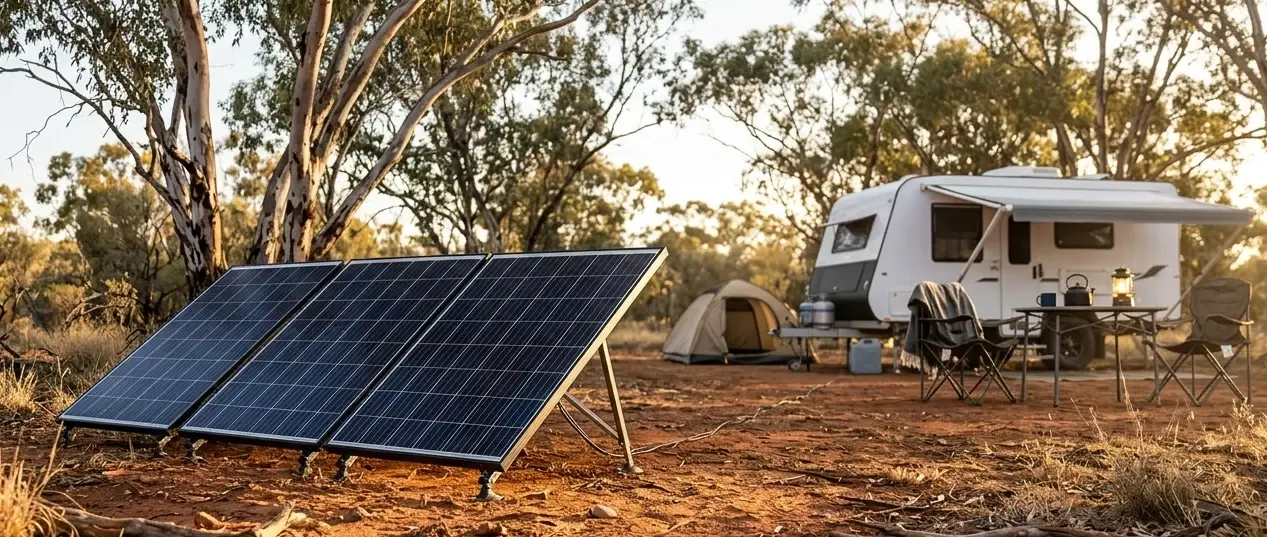
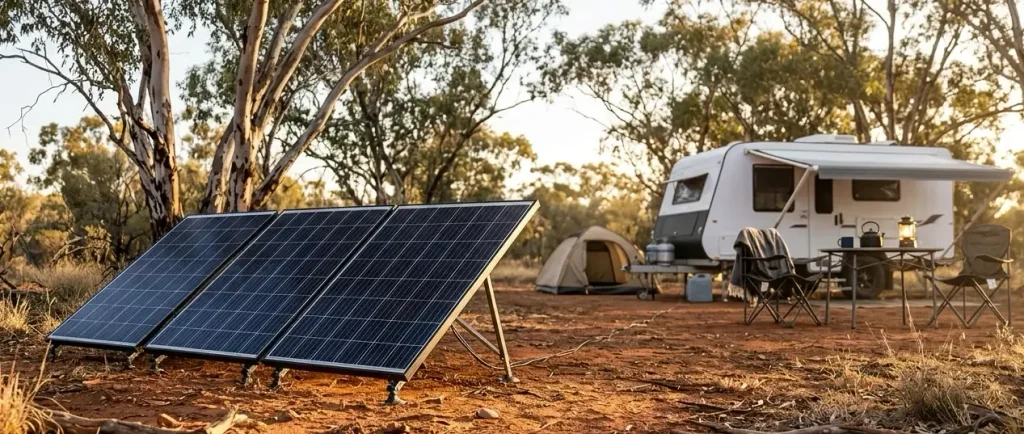
When it comes to building a custom 4WD canopy, upgrading a camper trailer, or putting together a DIY solar array for a remote shed, you don’t always need a massive, hyper-complex setup. Often, you just need a rugged, reliable workhorse panel that can bake under the harsh Australian sun day after day without failing.
Enter the Renogy 100W Monocrystalline Solar Panel, a popular choice for DIY builders thanks to its simple, standard design and budget-friendly price. Renogy is a well-known name in DIY solar, and its panels are sold across They have carved out a massive reputation in Australia for delivering high-quality solar components at prices that don’t make your eyes water.
But does this budget-friendly panel actually deliver its rated wattage when things get hot out in the bush?
- This review covers what you get for the money: the specs, the build quality, how it copes with Australian conditions and where its limits are.
The Hard Specs: What Are You Buying?
Renogy keeps things straightforward with industrial-grade materials. Here are the core numbers for this specific 100W rigid frame model:
- Maximum Power (Pmax): 100W
- Cell Type: Monocrystalline, 36 cells, about 22% cell efficiency
- Optimum Operating Voltage (Vmp): 20.4V
- Optimum Operating Current (Imp): 4.91A
- Open-Circuit Voltage (Voc): 24.3V (at standard test conditions; it rises in cold weather)
- Short-Circuit Current (Isc): 5.21A
- Maximum System Voltage: 600V DC
- Frame Material: Corrosion-resistant aluminium
- Weight: 6.4 kg
- Dimensions: 1062 x 530 x 35 mm
- Operating Temperature: −40°C to 80°C
- Junction Box: IP65
- Cables and Connectors: Pre-attached 14 AWG cables about 0.6 m long, with IP67-rated MC4 connectors
A key detail here is the monocrystalline construction. Monocrystalline panels are made from a single, pure crystal structure, making them significantly more efficient in lower-light conditions and compact space profiles compared to cheaper, older polycrystalline panels.
Want to see how rigid panels compare with portable and flexible types? Browse our Solar Panels hub.
Where the Renogy 100W Panel Excels
1. Bulletproof Weatherproofing for the Bush
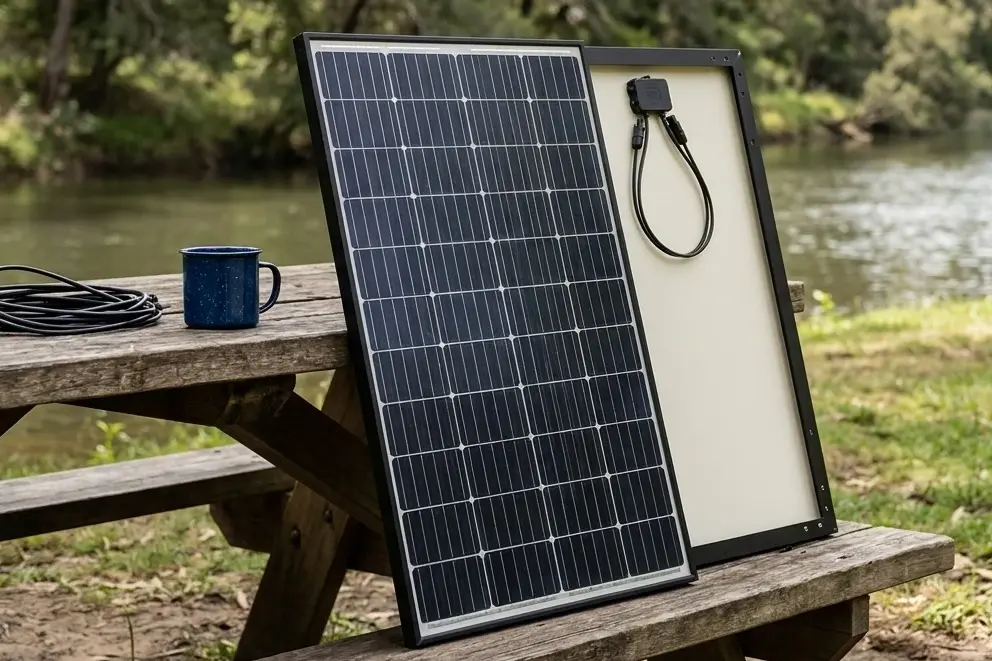
Australia’s climate is notoriously brutal on outdoor gear. Renogy handles this by enclosing the cells in low-iron tempered glass and wrapping the exterior in a rugged, corrosion-resistant aluminum frame. The junction box on the back features an IP65 waterproof rating, meaning it can survive heavy tropical downpours and dusty outback corrugations without letting moisture short out your system.
2. Advanced Bypass Diodes (The Partial Shade Fix)
One of the biggest killers of solar efficiency while camping is partial shade from overhanging gum trees. Shade across even a small part of a panel can cut its output sharply. Renogy builds bypass diodes into the junction box, which let current route around the shaded cells so the rest of the panel keeps producing.
3. Seamless Integration with Power Stations
Because this panel outputs standard voltage ranges and uses universal MC4 connectors, it pairs beautifully with almost any brand of portable power station (like your Bluetti AC200MAX or Jackery 1000 Pro). All you need is a simple MC4-to-DC adapter cable, and you can charge your portable generator entirely off-grid. Our off-grid solar and battery calculator can help you work out how many panels you need.”
At 24.3V open-circuit, a single panel suits most power stations’ solar inputs, but two panels wired in series reach about 48.6V, which is above the limit on some units. Check your manual before connecting more than one.
The Downside: What to Keep in Mind
While Renogy delivers exceptional value, there are a couple of trade-offs inherent to rigid panels:
- It is a Rigid Panel: At 6.4kg and built with glass, this isn’t a blanket-style panel you fold up into a neat canvas bag to slide under your mattress. It is designed to be permanently bolted down onto a roof rack, canopy, or caravan roof using standard Z-brackets.
- You Need an External Controller for Standard Batteries: If you are connecting this directly to a traditional 12V dual-battery system (like a standard AGM or Lithium deep-cycle battery in your car), you cannot plug it straight in. You will need to route it through an MPPT or PWM solar charge controller first to regulate the voltage. (Note: You do NOT need this if plugging directly into portable power stations, as they have controllers built-in)
If you need something you can carry and set up in minutes rather than bolt down, see our guide to portable and foldable solar kits for the alternatives.
Need to use our calculator for checking details?
More solar panel reviews
- Best Off-Grid & Portable Solar Panels in Australia (2026)
- BLUETTI PV200 Solar Panel Review
- Anker SOLIX PS200 Bifacial Solar Panel Review (AU)
Final Verdict
The Renogy 100W Monocrystalline Panel is a dependable, budget-friendly choice for DIY off-grid builders who want reliability without the premium price tag of commercial boutique solar brands.
If you want a lightweight, fabric solar blanket to carry by hand on picnics, look elsewhere. But if you want a set-and-forget, highly efficient panel to bolt to your vehicle, caravan, or camper trailer to keep your fridges humming indefinitely, Renogy is an exceptional choice.
Looking for something different? Compare rigid, portable and flexible options on our Solar Panels hub.
Ready to harvest the sun’s power?
- Check local pricing and multi-pack bundle sales directly on Renogy Australia.